Launch offer — valid today only

📄 Digital book in PDF · read it on your phone or print it

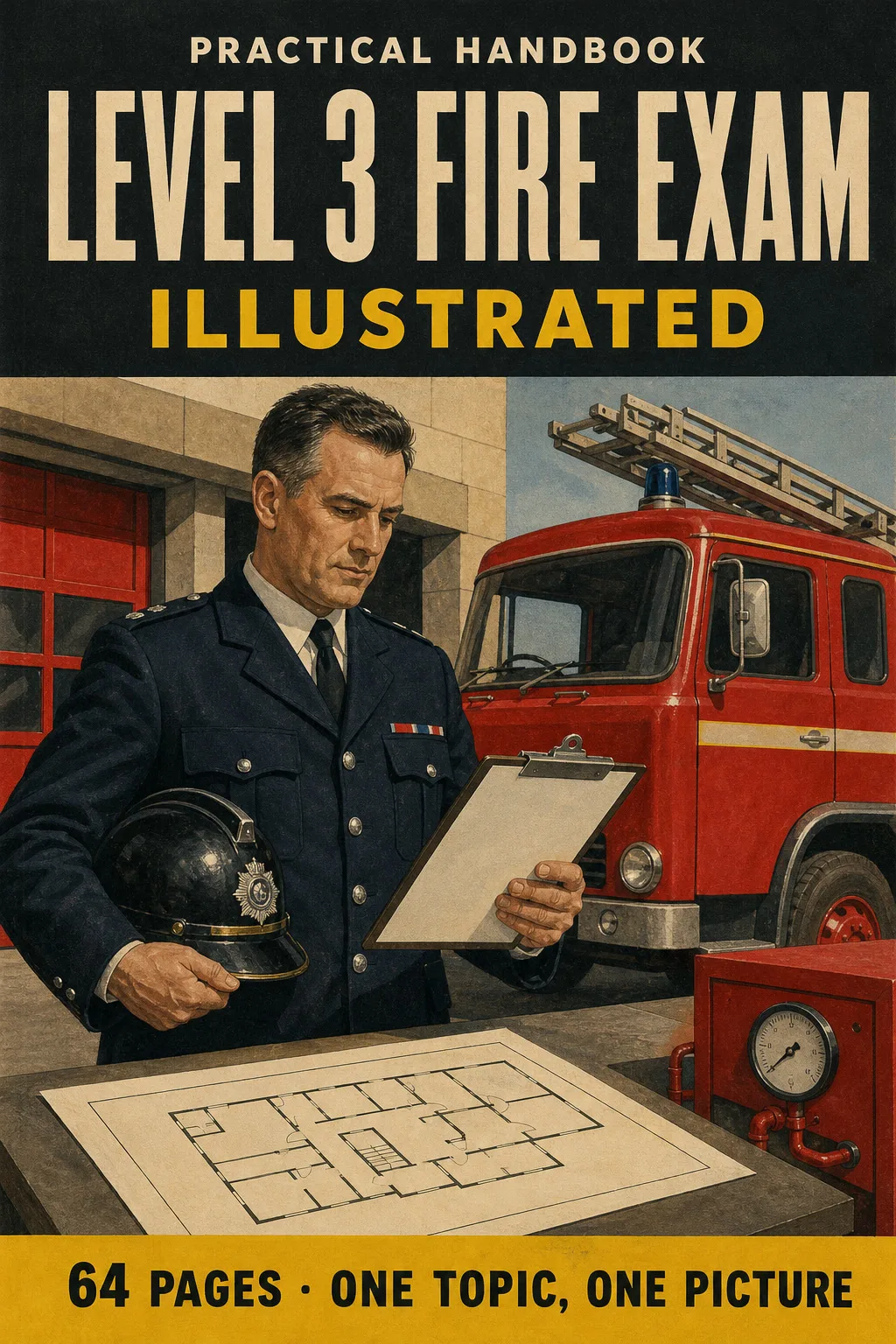
The Level 3 Fire Exam in Drawings: All Four Awards, Every Figure and Duty Where You Can See It One Topic on Every Page

Written for the UK Level 3 fire exam: the fire tetrahedron, flashover and backdraught, friction loss and pump pressure worked through, R, E and I fire resistance, incident command, the Fire Safety Order, HSWA 1974 and leading a watch. Every topic has its own page: the drawing first, then what you need to remember. 64 illustrated pages.

I WANT THE LEVEL 3 BOOK + 2 FREE BOOKS

🔒 Secure checkout · PDF by email · 30-day guarantee

Every topic, its own pageEach rule and calculation drawn, with the explanation beside it
64 illustrated pages8 parts, from the four awards on one map to the night-before checklist
Up-to-date sourcesIFE Level 3 syllabus, National Operational Guidance and the Fire Safety Order 2005
PDF by emailFormat

Look Inside the Book

Every page has one large drawing and a box with the figures, formulas and duties you need to know:

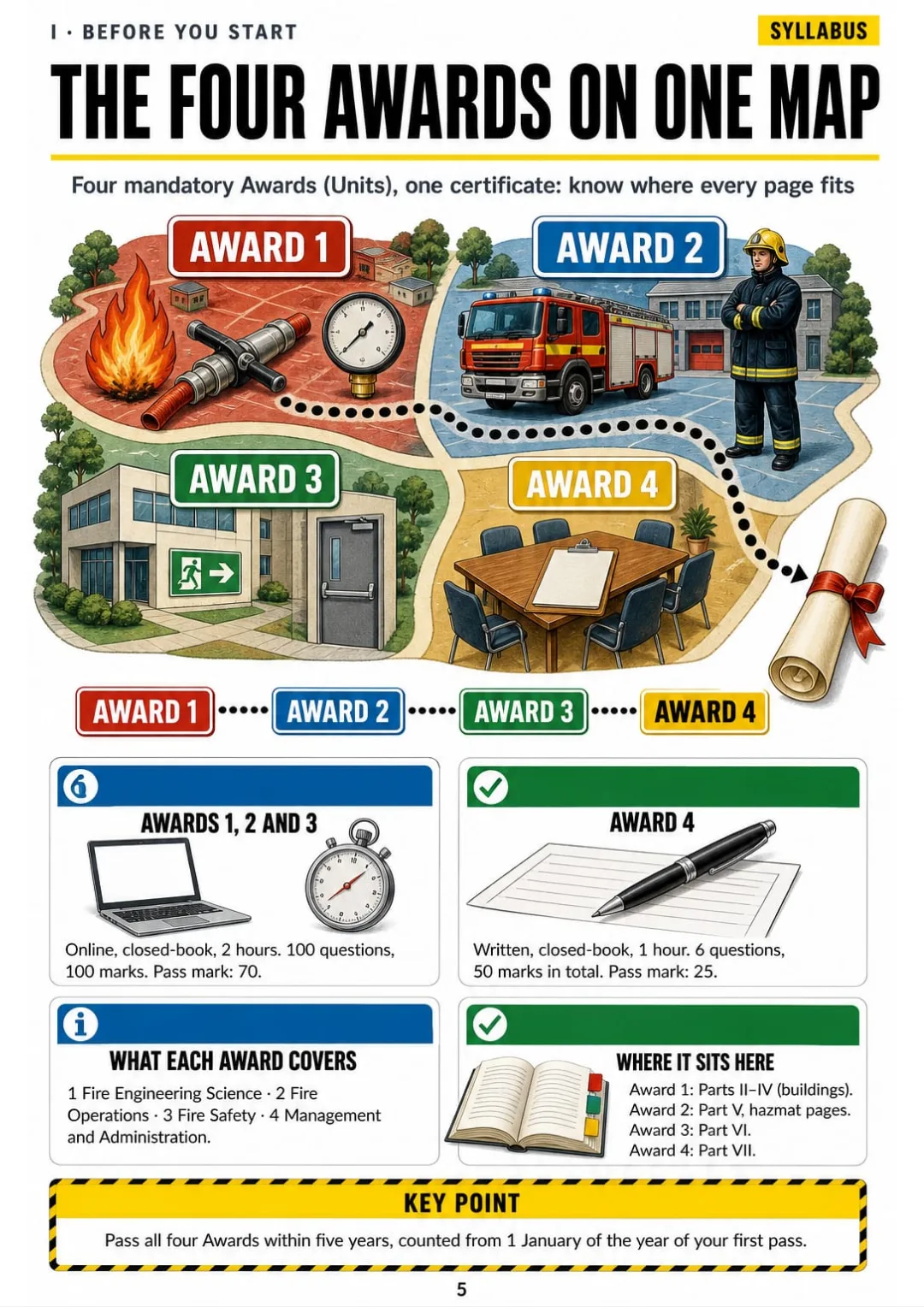
Awards 1–3: online, 100 questions, pass mark 70 · Award 4: written, 6 questions, pass mark 25
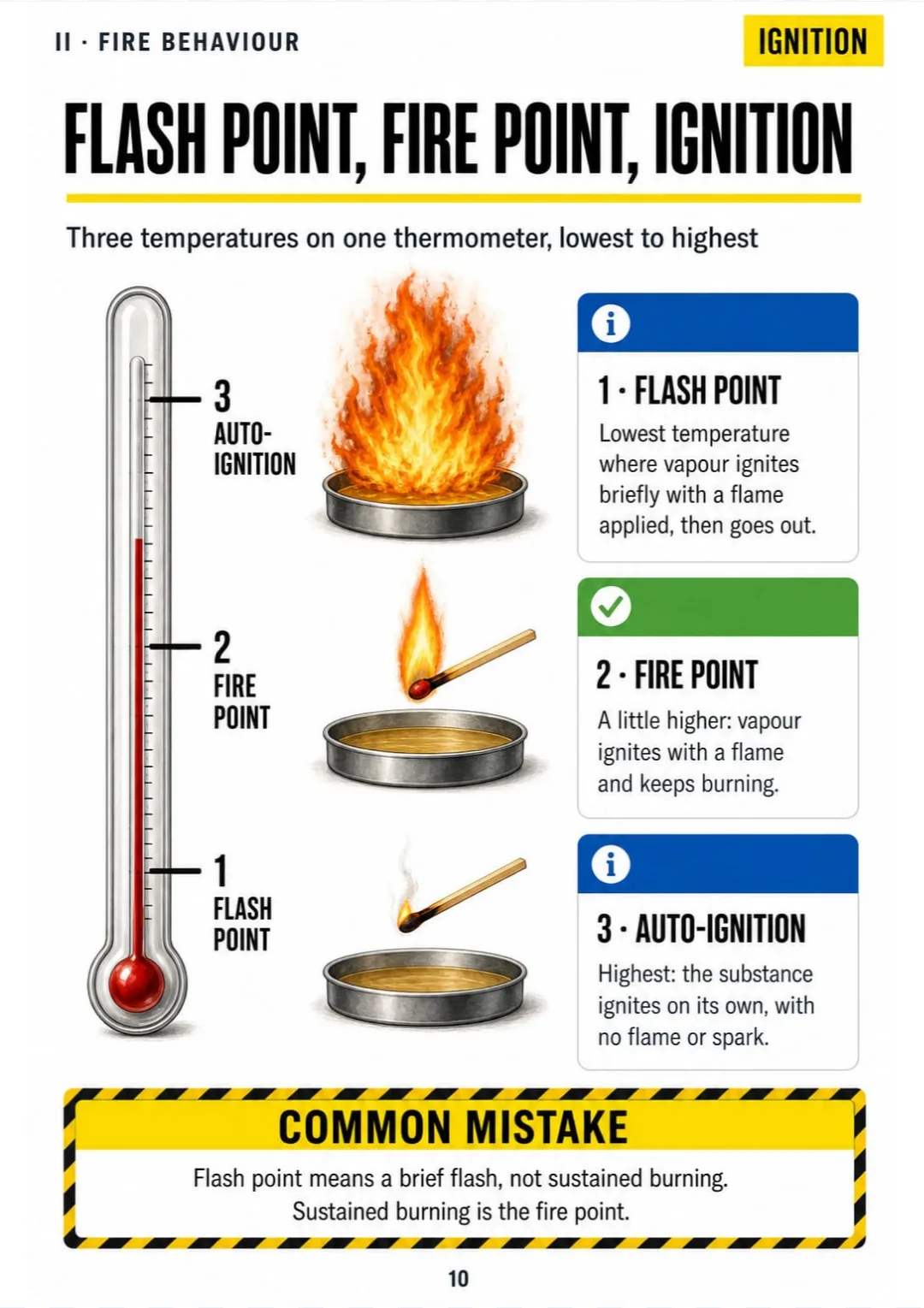
Flash point flashes, fire point keeps burning, auto-ignition needs no flame.
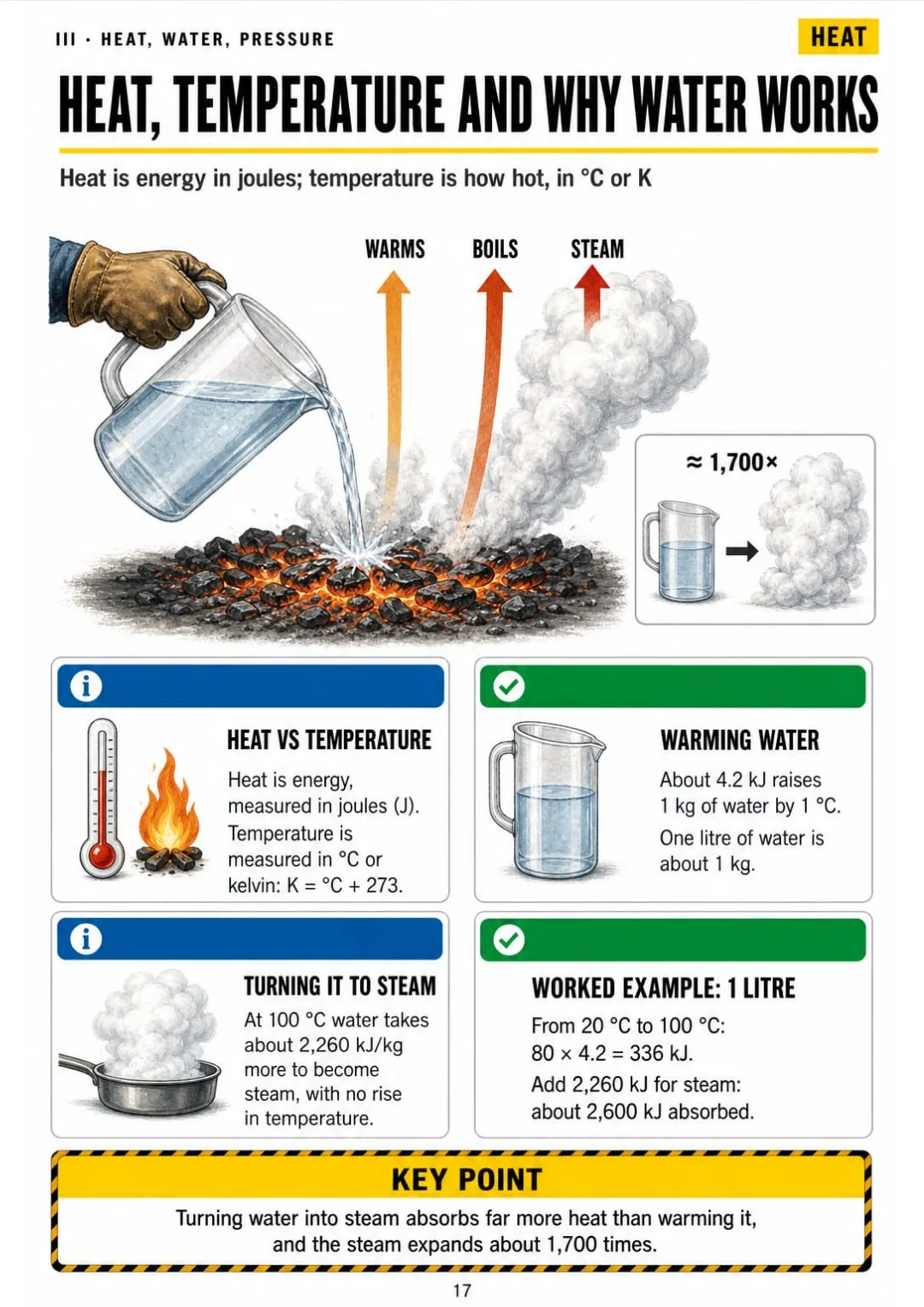
1 litre of water from 20 °C to steam absorbs about 2,600 kJ
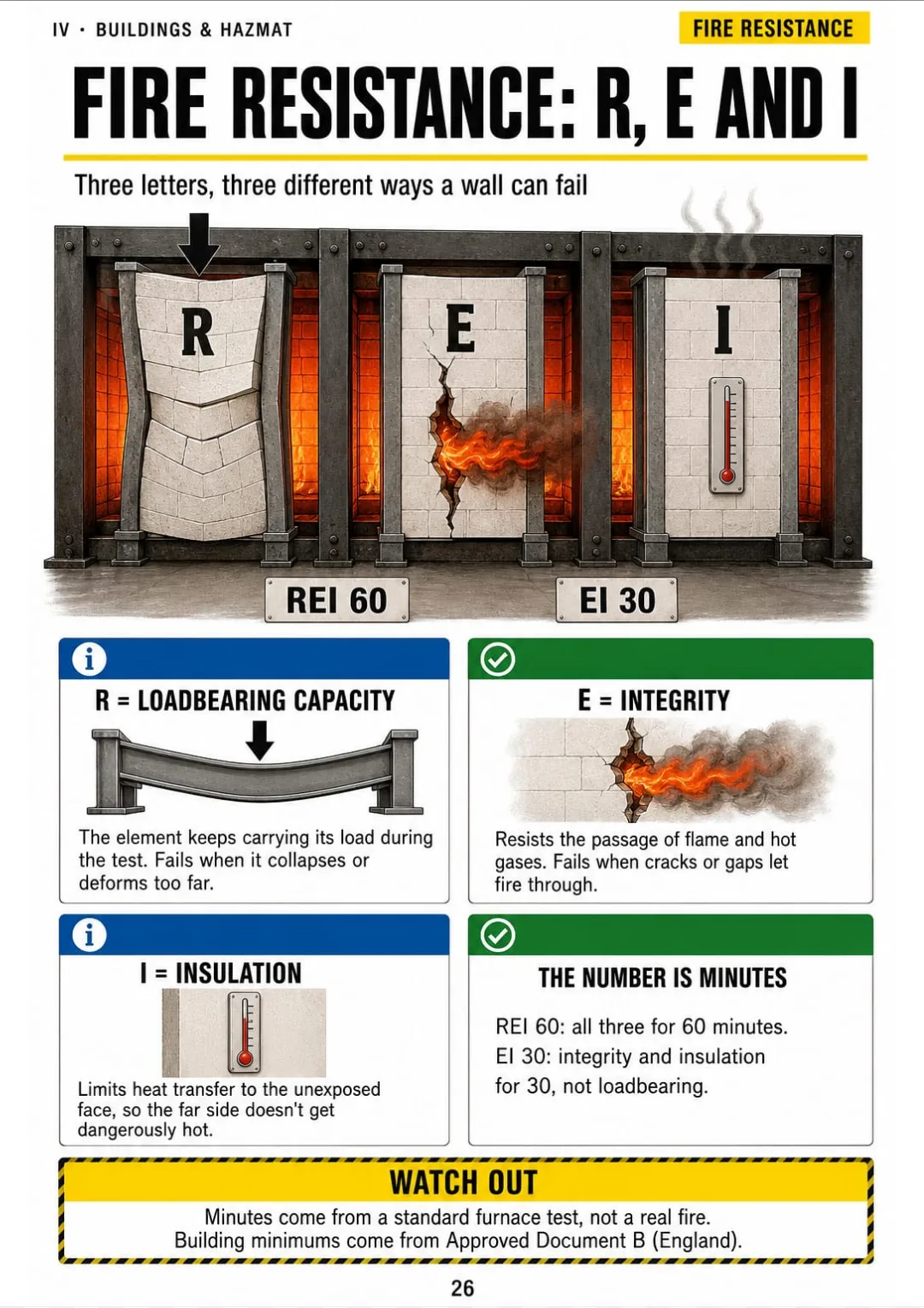
R = loadbearing, E = integrity, I = insulation, in test minutes (REI 60, EI 30)
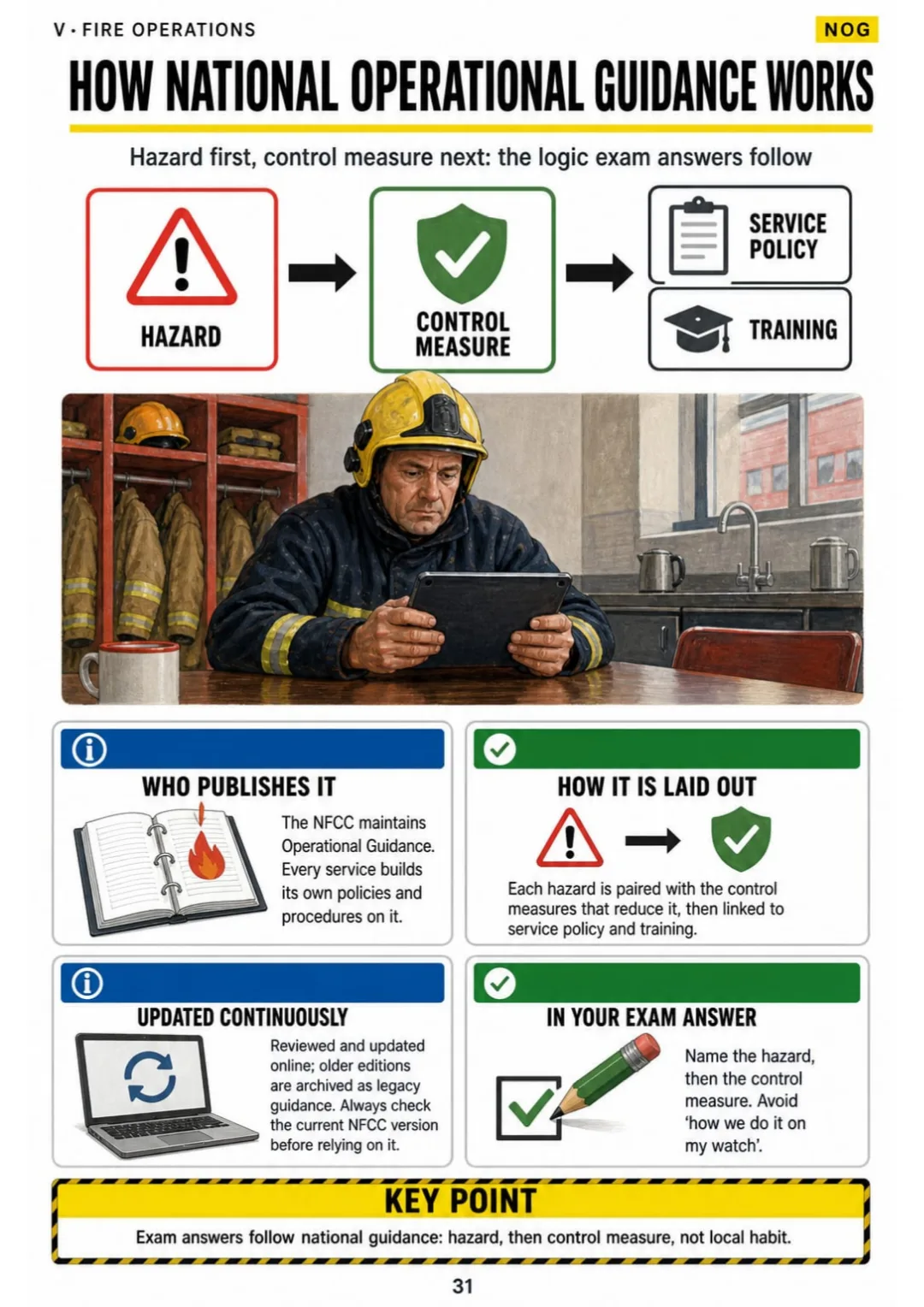
NOG: each hazard sits next to its control measures, linked to policy and training
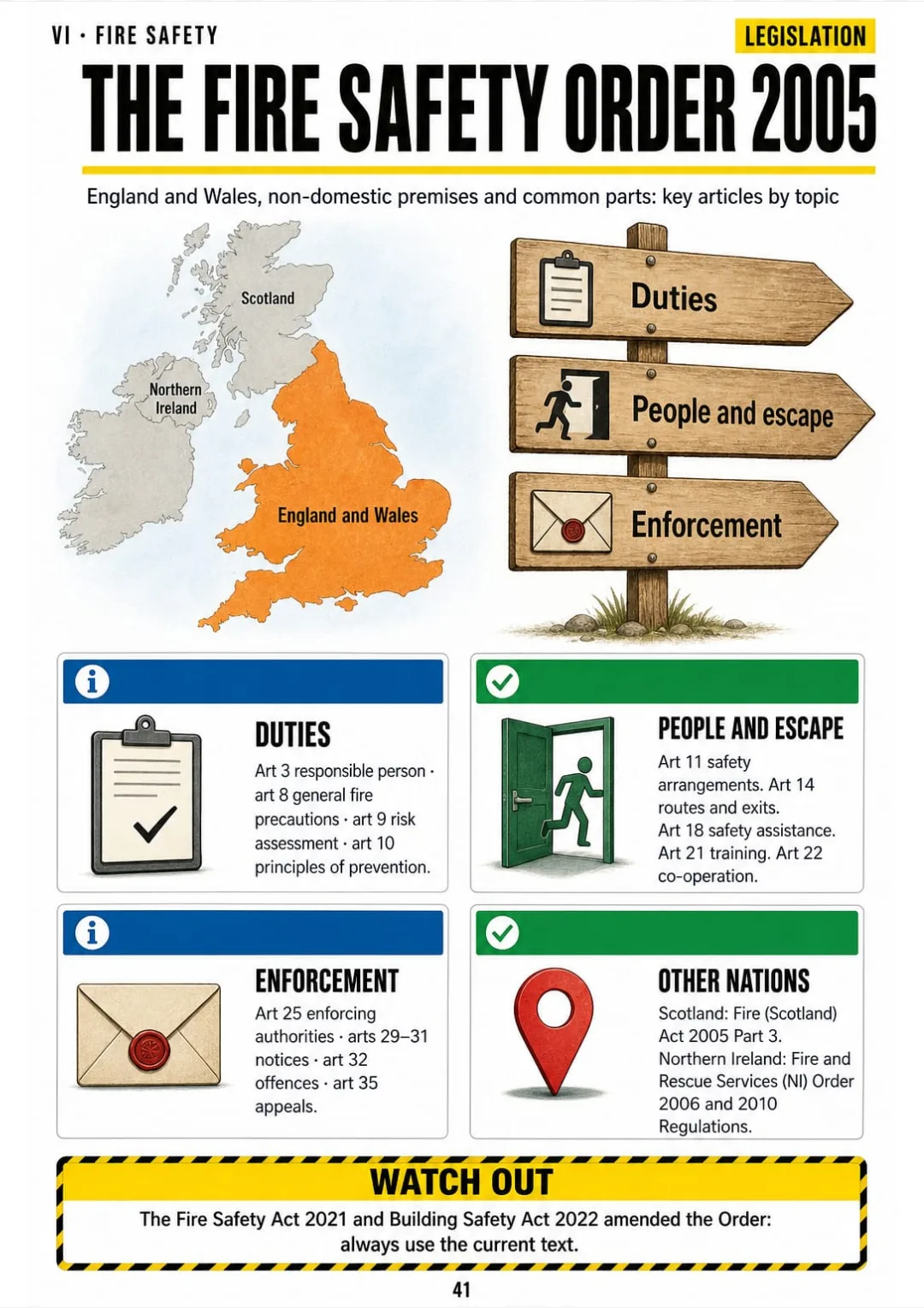
Fire Safety Order 2005: art 3, 9, 14, 29–31 and 35 grouped on one map
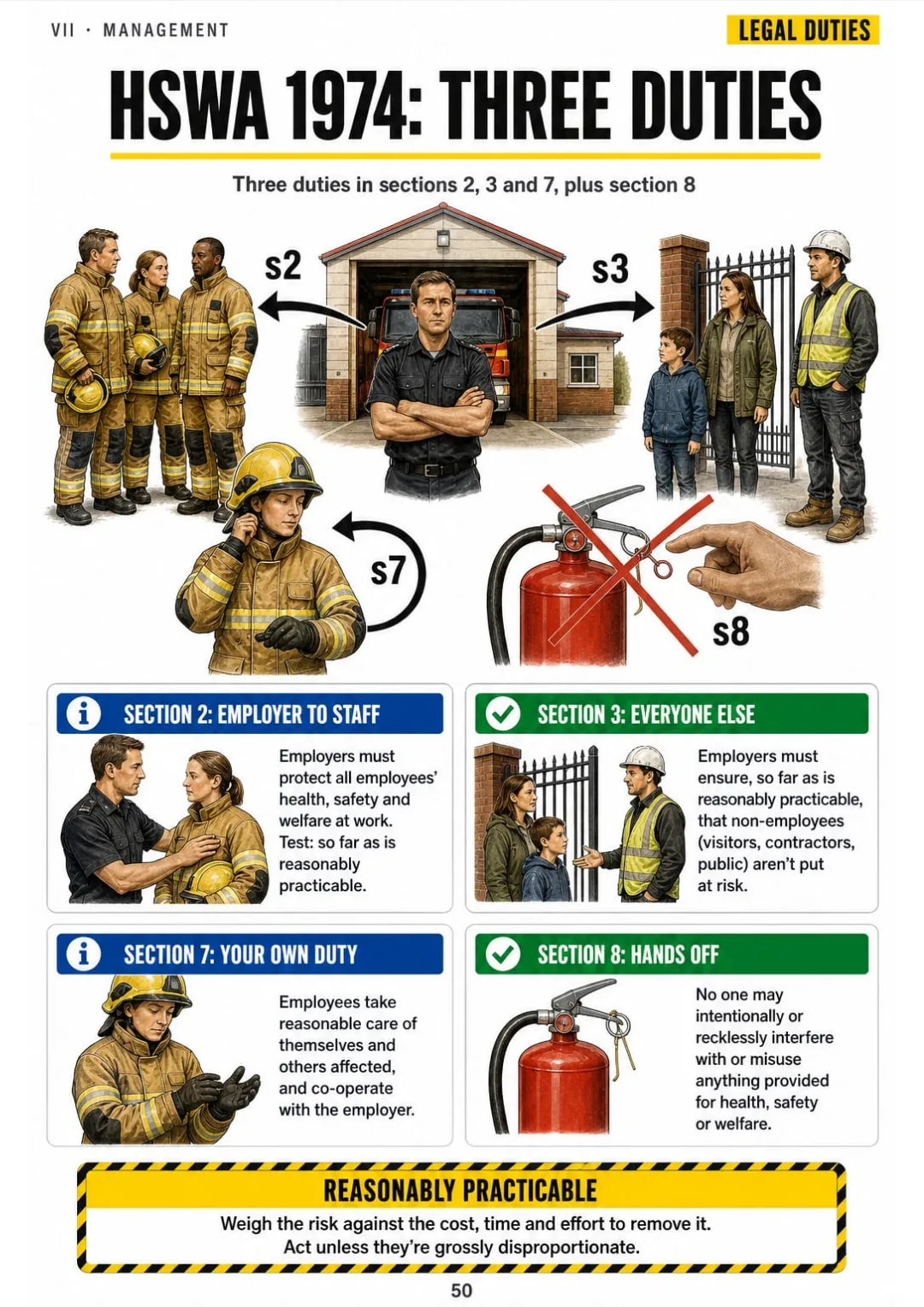
HSWA 1974: s2 employees, s3 others, s7 your own duty, s8 no misuse.
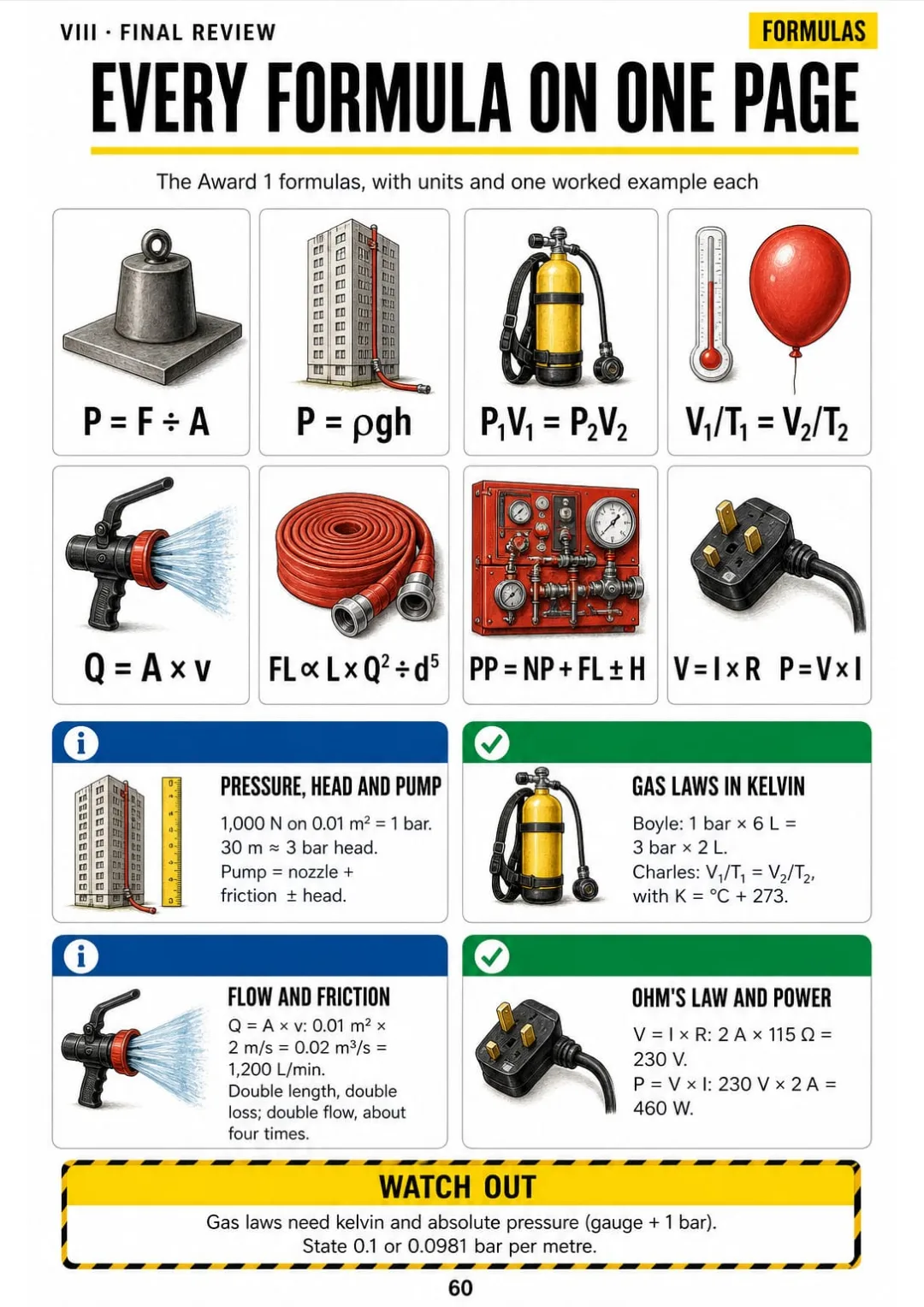
P = F ÷ A, 10 m ≈ 1 bar, Boyle, Charles, Q = A × v, V = I × R: one page

Swipe to see more →

These are real pages from the book. The table of contents is the full one: 8 parts and 60 topics.

The Problem Isn't You. It's How It Was Explained to You.

You're at the kitchen table after a run of nights, and the practice question says: explain why water is effective at extinguishing fire. You've put out hundreds of fires, but the words won't come.

The manual covers it in paragraphs: specific heat, latent heat of vaporisation, kilojoules per kilogram. Every figure is buried in a sentence, so by the next morning it's gone.

1 litre of water from 20 °C to steam absorbs about 2,600 kJ

In the book, it's one page. A drawing of one litre of water going from 20 °C to steam, with the two stages side by side and the key figure in a box: about 2,600 kJ absorbed per litre.

The rest of the book works the same way: the fire tetrahedron, R, E and I fire resistance, National Operational Guidance, the Fire Safety Order and HSWA 1974 each get their own page.

You can see why water works, and you can write it down in the exam without going back to the manual. The drawing does the explaining for you.

COMPARE FOR YOURSELF

The Same Topic, Two Ways to Study It

THIS
  • The manual: line after line
  • Combustion and extinguishing explained in words alone
  • You walk into the exam unsure
Combustion is a rapid exothermic oxidation reaction which requires the simultaneous presence of a combustible material, an oxidising agent, normally atmospheric oxygen, and a sufficient quantity of heat energy to raise the fuel to its ignition temperature. Where flaming combustion is sustained, a fourth element, namely the uninhibited chemical chain reaction involving free radicals, must also be taken into consideration. Extinguishment is accordingly achieved by the removal of one or more of these elements, by means of cooling, starvation, smothering or the inhibition of the chain reaction.
FOR THIS
  • The tetrahedron in one drawing
  • The four methods in one box
  • Water cools, a blanket smothers, powder inhibits: one glance
Flash point flashes, fire point keeps burning, auto-ignition needs no flame.
CONTENTS

Take a Look at the 8 Parts and 60 Topics

Before you start, fire chemistry and behaviour, heat, water and pressure, buildings and hazardous materials, fire operations, fire safety, management and administration, and a final review: 64 pages, all illustrated

IBefore You Start · pp. 5-7
  1. The Four Units on One Map
  2. State, Describe, Explain: Reading the Question
  3. A Study Routine That Fits Around Shifts
IIFire Chemistry and Fire Behaviour · pp. 8-16
  1. The Fire Triangle and the Tetrahedron
  2. Complete and Incomplete Combustion
  3. Flash Point, Fire Point, Ignition Temperature
  4. Flammable Limits: Too Lean, Too Rich
  5. The Four Stages of a Compartment Fire
  6. Flashover
  7. Backdraught
  8. Flashover vs Backdraught, Side by Side
  9. Classes of Fire and Extinguishing Media
IIIHeat, Water and Pressure · pp. 17-25
  1. Heat, Temperature and Why Water Works
  2. Conduction, Convection, Radiation
  3. Pressure: Force on an Area
  4. Head Pressure in a High-Rise
  5. Gas Laws and the BA Cylinder
  6. Flow: Area × Velocity
  7. Friction Loss: Length, Flow, Diameter
  8. Working Out Pump Pressure
  9. Electricity at Incidents
IVBuildings and Hazardous Materials · pp. 26-30
  1. Fire Resistance: R, E and I
  2. Compartmentation and Fire Stopping
  3. How Steel, Concrete and Timber Behave
  4. Reading an Emergency Action Code
  5. Hazard Placards on Vehicles and Tanks
VFire Operations · pp. 31-40
  1. National Operational Guidance: How It's Built
  2. Incident Command Levels
  3. The Decision Control Process
  4. Sectors and Span of Control
  5. Risk Assessment and Tactical Mode
  6. JESIP: Working with Police and Ambulance
  7. Breathing Apparatus Entry Control
  8. Compartment Firefighting and Ventilation
  9. Water Supplies and the Hydrant Plate
  10. Hazmat Incidents: Cordons and Decontamination
VIFire Safety · pp. 41-49
  1. The Fire Safety Order 2005 at a Glance
  2. The Responsible Person
  3. Fire Risk Assessment in Five Steps
  4. Means of Escape
  5. Fire Detection and Alarm Categories
  6. Emergency Lighting, Signs and Fire Doors
  7. People Who Need Help to Escape
  8. After Grenfell: The New Duties
  9. Enforcement: Three Notices
VIIManagement and Administration · pp. 50-59
  1. Health and Safety at Work Act 1974
  2. Risk Assessment and the Hierarchy of Control
  3. RIDDOR: What You Must Report
  4. Investigating Accidents and Near Misses
  5. The Fire and Rescue Services Act 2004
  6. Inspection: Effectiveness, Efficiency, People
  7. The Core Code of Ethics
  8. Equality Act 2010
  9. Leadership: Task, Team, Individual
  10. Managing Performance and Conduct
VIIIFinal Review · pp. 60-64
  1. Every Formula on One Page
  2. The Legislation Timeline
  3. Acronyms You Need to Know
  4. The Mix-Ups That Come Up Most
  5. The Night-Before Checklist

One Page, One Topic, All Clear

Think of it this way:

You're in the exam, and a question asks you to work out the pump pressure for a line of hose going up three floors. The clock is running.

You've seen that page in the book: the hose drawn up the side of the building, every 10 m of height marked as about 1 bar, friction loss added on, and the sum worked through with the units.

NOG: each hazard sits next to its control measures, linked to policy and training

It's the same for flashover and backdraught, the Decision Control Process, the responsible person, RIDDOR and leading a watch: each one has its own page.

Level 3 Fire Exam Illustrated has 8 parts and 60 topics, all drawn, and it ends with every formula on one page, the legislation timeline and a night-before checklist.

What you see drawn, you don't have to memorize.

What's Inside Level 3 Fire Exam Illustrated:

Ipp. 5-7

Before You Start

The four awards on one map, how to read the command words ‘state’, ‘describe’ and ‘explain’, and a study routine that fits around shifts.

IIpp. 8-16

Fire Chemistry and Fire Behaviour

The fire triangle and tetrahedron, combustion, flash point and fire point, flammable limits, the stages of a compartment fire, flashover, backdraught and the classes of fire.

IIIpp. 17-25

Heat, Water and Pressure

Heat, pressure and water as worked sums: why water works, heat transfer, head pressure, gas laws and the BA cylinder, friction loss, pump pressure and electricity at incidents. You do the calculation questions step by step, with the units.

IVpp. 26-30

Buildings and Hazardous Materials

R, E and I fire resistance, compartmentation and fire stopping, how steel, concrete and timber behave, emergency action codes and hazard placards.

Vpp. 31-40

Fire Operations

National Operational Guidance, incident command levels, the Decision Control Process, sectors, tactical mode, JESIP, BA entry control, ventilation, water supplies and hazmat.

VIpp. 41-49

Fire Safety

The Fire Safety Order 2005, the responsible person, fire risk assessment in five steps, means of escape, detection and alarm, fire doors, the Fire Safety (England) Regulations 2022 and enforcement notices.

VIIpp. 50-59

Management and Administration

HSWA 1974, the hierarchy of control, RIDDOR, accident investigation, the Fire and Rescue Services Act 2004, inspection, the Core Code of Ethics, the Equality Act and leadership.

VIIIpp. 60-64

Final Review

Every formula on one page, the legislation timeline, the acronyms, the most common mix-ups and the night-before checklist.

At the end of the book: Every formula on one page, the legislation timeline, the key acronyms and a night-before checklist.
Plus: 2 Free Books

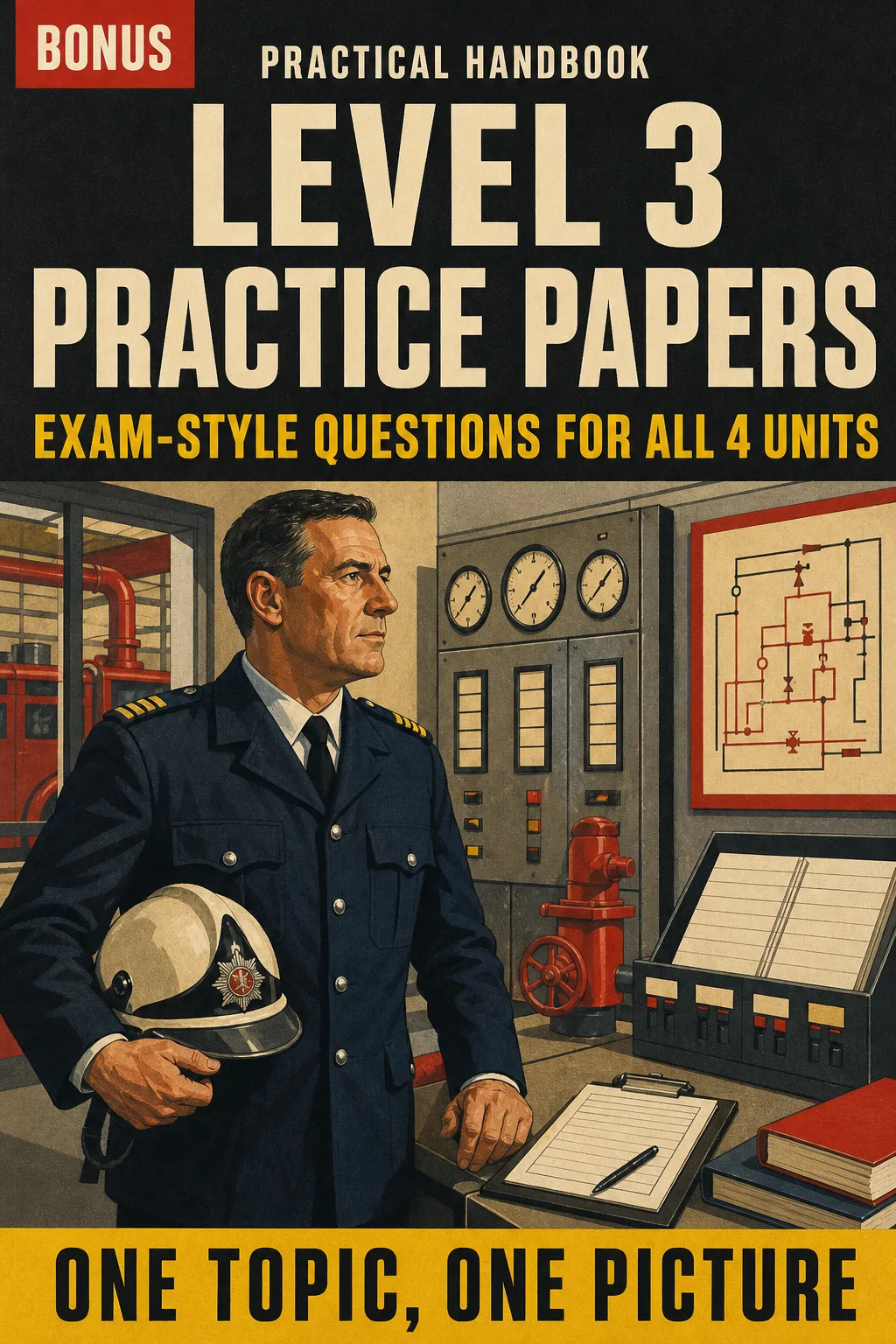
Level 3 Practice Papers: Exam-Style Questions for All 4 Units

BONUS 1: «Level 3 Practice Papers: Exam-Style Questions for All 4 Units»

Value on its own: US$ 17.90

Practise writing answers the way the papers ask for them, unit by unit, and check yourself against a model answer.

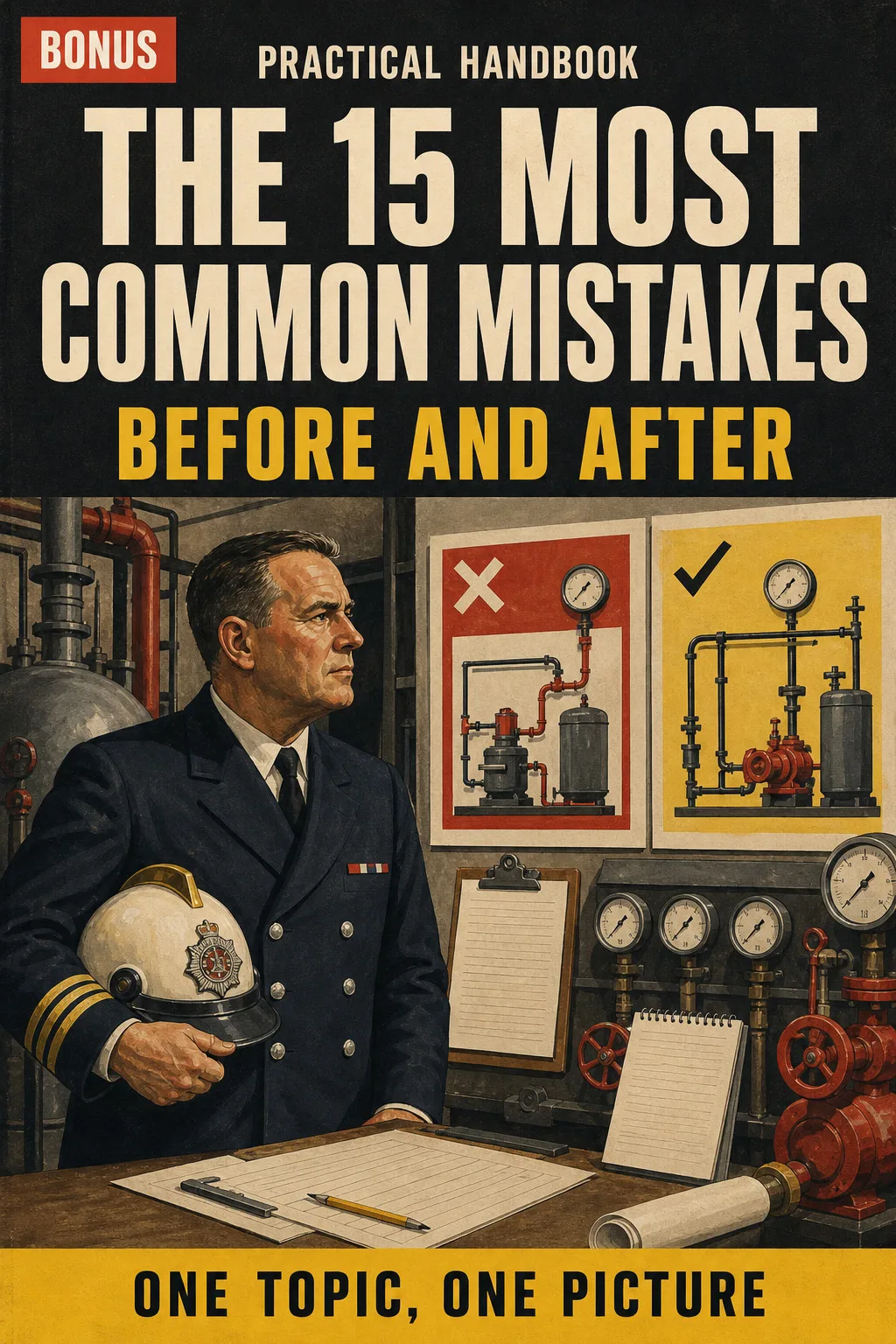
The 15 Most Common Mistakes: Before and After

BONUS 2: «The 15 Most Common Mistakes: Before and After»

Value on its own: US$ 14.90

See the slips people make most often — flashover vs backdraught, units in friction loss, responsible person duties — and the correct version side by side.

Level 3 Fire Exam Illustrated with 2 Free Books

  • Level 3 Fire Exam Illustrated: 64 illustrated pagesUS$ 63
  • BONUS 1: Level 3 Practice Papers: Exam-Style Questions for All 4 UnitsUS$ 17.90
  • BONUS 2: The 15 Most Common Mistakes: Before and AfterUS$ 14.90
  • High-resolution PDF to printIncluded
Total value US$ 95.80
YOUR PRICE:
US$ 27
You save US$ 68.80
YES, I WANT LEVEL 3 FIRE EXAM ILLUSTRATED FOR US$ 27

📄 This is a digital PDF book sent to your email: nothing is printed or shipped.

Secure purchaseEncrypted payment30-day guarantee

PDF by email: We email you Level 3 Fire Exam Illustrated as a PDF, together with the two free books. It's a single payment: no installments, no extra charges.

Who This Book Is For

You're studying for Level 3

You're studying for Level 3

The four awards in order, one page per topic, so an hour of study after a shift actually gets you somewhere.

Your exam date is close

Your exam date is close

The final review, every formula on one page and the practice papers, so you can check yourself before the day.

You already do the job

You already do the job

You know the fireground and the premises. The book gives what you already do its names, figures and legislation, ready for a written answer.

Everything You Get Today

US$ 95.80US$ 27
YES, I WANT LEVEL 3 FIRE EXAM ILLUSTRATED FOR US$ 27

📄 This is a digital PDF book sent to your email: nothing is printed or shipped.

30DAYS
GUARANTEE

30-Day Guarantee

Try Level 3 Fire Exam Illustrated for 30 days, bonus books included.

We refund everything if the file won't open, if the book isn't what you see here, if you were charged twice or if the email doesn't arrive. Just email us.

You pay once. No subscriptions.

Frequently Asked Questions

Is it for me if I've been in the service for years and haven't sat an exam in a long time?

Yes. It doesn't teach you the job and it doesn't start from zero. It puts what you already do into the order the exam asks for, one topic per page, and the calculations (head pressure, friction loss and pump pressure) are worked through step by step, with the units.

Where does the content come from?

From the current IFE Level 3 syllabus, cross-checked against National Operational Guidance, the Regulatory Reform (Fire Safety) Order 2005, the Fire and Rescue Services Act 2004 and HSE guidance. The fire safety law pages follow England and Wales: in Scotland and Northern Ireland, fire safety legislation is different.

Is it official material?

No. It's an independent study book. It is not affiliated with or endorsed by the Institution of Fire Engineers or any fire and rescue service, and it doesn't give you a certificate or CPD points: the Level 3 Certificate only comes from sitting and passing the exam.

Does it replace a course or my service's training?

No. It's a revision aid to use alongside your course, your service's training and your own operational experience.

Are the practice questions the real exam questions?

No. They're written for this book in the style of the papers, so you can practise and compare your answer with a model answer.

How do I receive it?

The book and the 2 free books arrive as PDFs by email, sent to the address you enter at checkout.

Do I have to pay every month?

No. It's a one-off payment, with no subscription.

Can I have it on paper?

Yes. It's a PDF, so you can print it at home or at a print shop and keep it at the station.

How does the refund work?

You have 30 days. We refund everything if the file won't open, if the book isn't what you see on this page, if you were charged twice or if the email doesn't arrive: just email us.

Before You Close This Page

No more rereading the manual and finding nothing left the next day.

Friction loss, the tetrahedron, the Fire Safety Order: you see each one drawn, and it makes sense.

You walk into the exam knowing where everything sits.

Drawings make studying faster.

The book is right below.

One-time payment: US$ 27 · Guarantee: 30 days · PDF by email

YES, I WANT LEVEL 3 FIRE EXAM ILLUSTRATED FOR US$ 27

📄 This is a digital PDF book sent to your email: nothing is printed or shipped.